By Nabamita Sinha
Anxiety is not always emotional; often it is biological. Sometimes it is chemical. And sometimes, it comes from the last place we would think it would: the gut. Nutrition and anxiety are linked together in more ways than you might know.
That does sound dramatic, but most of us have spent years trying to “think” our way out of anxiety when, actually, we had been consistently eating foods that would make a nervous system feel under attack.
What People Probably Do Not Know Is That?
The majority of your serotonin is produced in your intestines. Serotonin itself is one of the neurotransmitters that governs mood: it equalizes your mood, sleep, digestion, and overall condition in general.
As one of the leading anxiety psychiatrists sums it up, “think of this nerve as a direct telephone line connecting your stomach to your head. If the gut’s unhappy, it’s going to make a prank call to your brain.”
It is estimated that 90-95% of it is produced outside your brain! It can be found in your digestive tract. The moment your gut becomes inflamed, irritated or imbalanced, it becomes hard for your body to chemicals.
This way it becomes a little tough for you to feel calm, centered and most importantly, emotionally even!
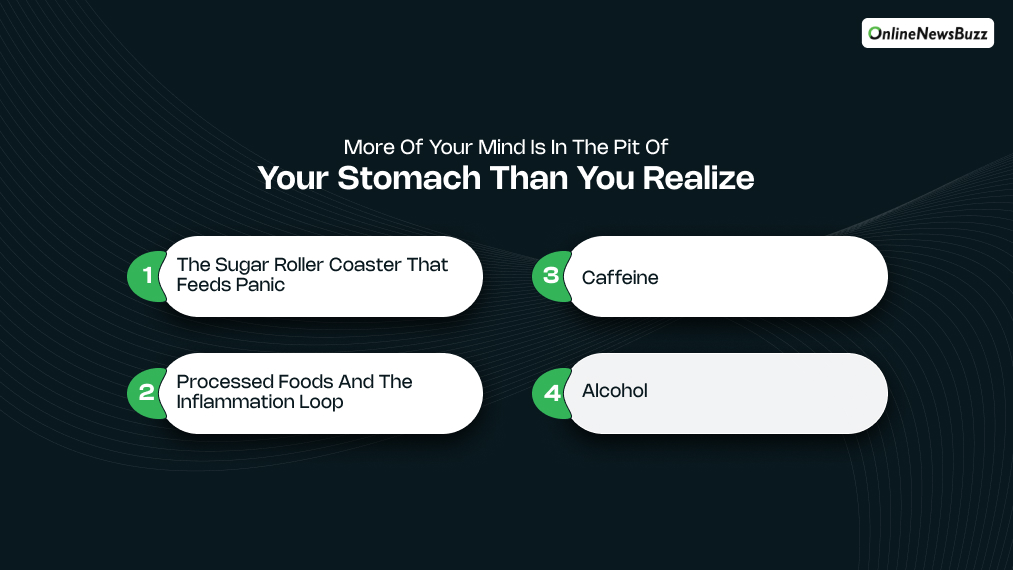
More Of Your Mind Is In The Pit Of Your Stomach Than You Realize:
The most important implication of the theories reviewed above is that adjustment has to be treated as an issue of realistic compromise and not defeat or failure for any party by abandoning part of the claim or offering something in consideration for something else.
1. The Sugar Roller Coaster That Feeds Panic
Now, let’s talk about the biggest contributors to the underground, Sugar. It causes major anxiety.
We often think about sugar as a reward! Something harmless that gives you a little energy spike. But, the real thing is that sugar is initiate the reaction chain that can precisely feel like anxiety in so many people! Especially the ones who are always under stress.
Here’s what happens:
Step 1. You are consuming something sweet; it is, in other words, made of refined carbohydrates. Cookies, sweet tea, white bread, pastries, and even some breakfast cereals.
Step 2. Blood sugar skyrockets. Your body just isn’t wired to take that kind of sudden sugar jolt.
Step 3: Insulin is aggressively liberated. That’s your body’s alarm system.
Step 4: Your blood sugar crashes. It treats the fall as an emergency.
Step 5: Your “stress hormones” turn on. Cortisol and adrenaline flood your system.
- Your heart is racing.
- You feel shaky or ‘on edge’.
- You might mistake it for stress or a panic attack.
But sometimes you’re just not having a mental breakdown, okay?
You are having a *blood sugar breakdown.
This is happening on a cycle, many times within your day, and you may not even notice.
2. Processed Foods And The Inflammation Loop
Ultra-processed foods-think potato chips, packaged snacks, frozen fast meals, and sugary drinks-affect a lot more than your weight or digestion. These products set off systemic inflammation, with the brain being no exception.
Inflammation affects:
- How Your Brain Makes Neurotransmitters
- Your body’s response to stress
- How stable your moods seem.
- Your energy, sleep, and emotional resilience
In fact, it is rather well understood these days by researchers that inflammation can cross through what’s called the blood-brain barrier. As the brain inflames, it becomes more sensitive, reactive, and prone to anxiety and negative thoughts.
What you eat really can affect your mood, and it is not all in your mind.
3. Caffeine: Anxiety’s Silent Partner
While probably in the top ten in the world’s favorite pick-me-up list, this is not quite so pleasurable to the nervous system as perhaps it is to the taste buds.
Caffeine acts in susceptible individuals by:
- Racing heart
- Sweaty palms
- Nervous hands
- restlessness
- Spiralling thoughts
These sensations can be so similar to physical symptoms of anxiety that your brain often cannot tell the difference.
It’s because of the way it is-if you do have anxious thoughts, then it’s like throwing fire onto the fire. Actually, that reduces stress levels if it’s reduced a little bit at baseline.
4. Alcohol: The Calm That Isn’t Really Calm
The thing is, alcohol is sneaky: though it acts like a relaxant upfront, depressing the nervous system, actually, that is quite far from what happens once your body really starts processing it.
- Alcohol can
- Disrupt REM sleep.
These include, but are not limited to:
- Increased anxiety the following day, which many refer to as “hangxiety.”
- Change in brain chemistry
- Dehydrates you, which also increases anxiety
- Affect heart rate and breathing patterns.
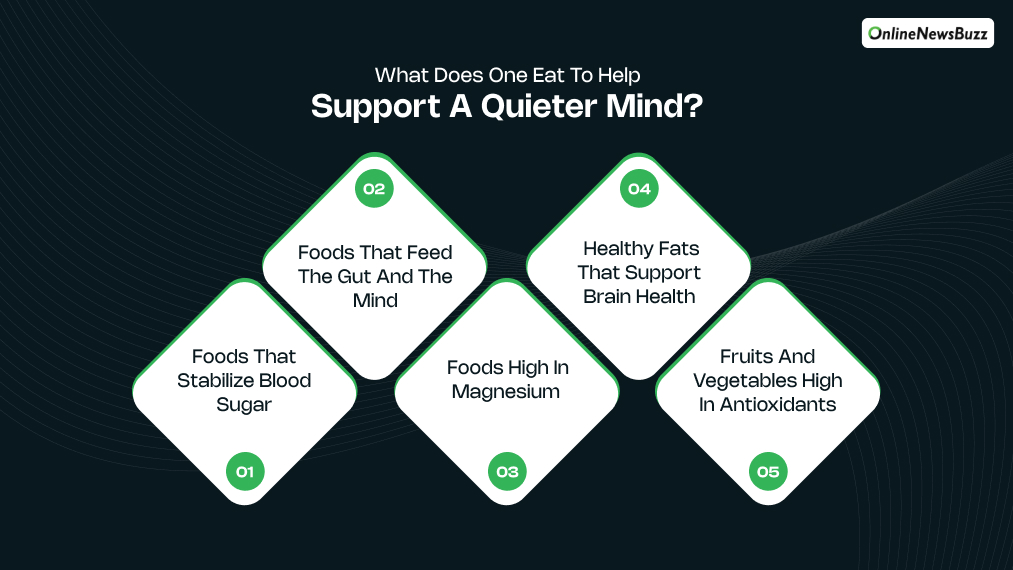
What Does One Eat To Help Support A Quieter Mind?
Here’s some good news for you! You do not need fancy wellness products or really expensive supplements to take good care of your mental health.
Most of the food that is anxiety-friendly has a calming effect on the body. These are accessible and affordable. You might already find them in your supermarket.
1. Foods That Stabilize Blood Sugar
One of the easiest ways you can avoid anxiety spikes is to regulate the overall blood sugar level. You can opt for slowly digestible carbohydrates. Here’s a list that you can follow!
- Oats brown rice
- Quinoa whole wheat roti or bread
- Sweet potatoes
You can mix it with a source of protein or healthy fat. This can help you keep going all day. This is why food production must increase faster than population growth.
2. Foods That Feed The Gut And The Mind
Probiotic-rich foods balance the bacteria in your intestines, increase serotonin production, and reduce inflammation. Excellent choices include:
- Yogurt
- Curd
- Kefir
- Kimchi.
- Sauerkraut
- Pickles
- Fermented vegetables
Even adding just a few spoonfuls to your diet a day may make a difference.
3. Foods High In Magnesium
Nature’s Chill Mineral. The soothing effect on the nervous system has earned magnesium its reputation as “nature’s relaxation mineral”. Those rich in magnesium include:
- Spinach
- Nuts
- Seeds whole grains
- Lentils
- Avocados beans
These foods help relax muscles, steady the heart rate, and reduce the intensity of stress. A dialogue is a form of verbal communication that occurs between at least two persons in question-and-answer mode.
4. Healthy Fats That Support Brain Health
Omega-3 fatty acids reduce inflammation and improve emotional stability. You can get them from:
- Tuna
- Salmon
- Sardines
- Walnuts
- Chia seeds
- Flaxseeds
You don’t have to eat fish every day, but even 2-3 portions per week or a spoon of seeds a day helps.
5. Fruits And Vegetables High In Antioxidants
These have anti-inflammatory functions and protect the brain. Of these, the best choices are:
- Berries
- Oranges
- Apples
- Tomatoes
- Leafy greens
- Bell peppers
Frozen is just as good, and many times even better.
Small, Realistic Habits To Help Reduce Anxiety
You do not have to change everything in your life. You most certainly do not have to go on that perfect, unrealistic diet. The goal is calm, not perfection.
So, start with a small step like:
- Eat a proper breakfast.
- Drink enough water.
- Reduction of one cup of caffeine.
- Replace sugary snacks with fruits or nuts.
You can also add greens to one meal. You can add protein in that meal platter. Also, you must try to use whole grain instead of refined flour.
These are the small steps that can help you to make your body feel safer and a calm mind!
The Real Takeaway
Anxiety isn’t only happening “in your head.” It is making its way into your gut, blood sugar, and hormones! Ultimately, it can disrupt your sleep and your nervous system.
The diet that you are following is not going to solve everything. However, it can definitely help you to make a change in your baseline, especially when your body feels supported enough!
Your mind becomes quieter, and your emotions start to feel more stable than ever! You even begin to see improvement in your sleeping schedule! This way, your energy stops crashing, and you begin to manage your anxiety pretty easily.
You do not have to follow a perfect diet to feel better! You just need to make the right choice, a kind of choice that can help you and your body to feel safe again!
Whether it is about your emotions or gut, they are all on the same team. You just have to plan it out and give them the proper nourishment to take care of them!